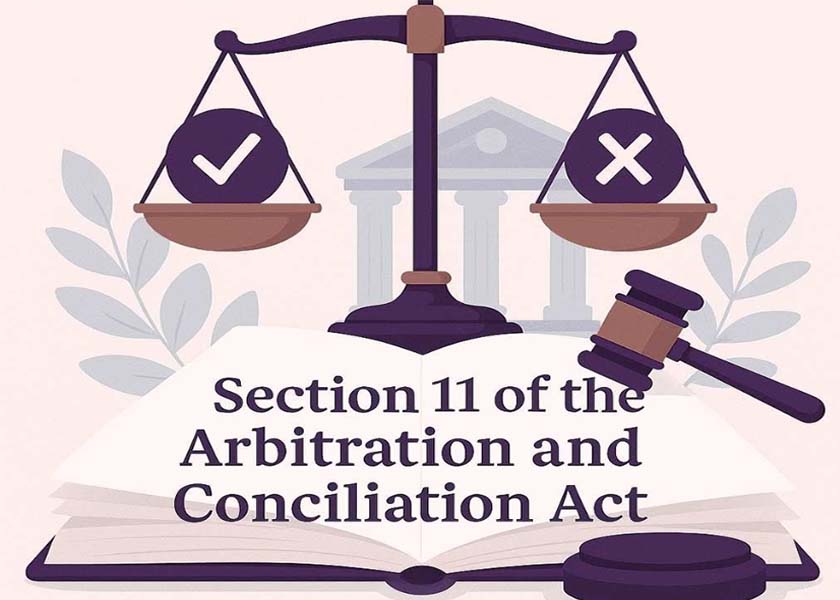
Latest News Whether a member of a consortium can itself invoke Section 11 of the Arbitration and Conciliation Act, 1996. Two civil appeals were filed against an order passed by the High Court for the State of Telangana at Hyderabad u/s. 11(6) of the Arbitration and Conciliation Act, 1996 constituting an Arbitral Tribunal (AT) for resolution of dispute as per the arbitration clause 22.2 in General Conditions of Contract. The contest was on the ground that the first respondent, being one of the members of the Consortium, could not have invoked arbitration in its individual capacity. The question that arose was whether a member of a consortium can itself invoke Section 11 of the Arbitration and Conciliation Act, 1996. A 2-Judges bench of the Supreme Court held – “16. … Answer to that question will necessarily depend on enquiry into the terms of the principal contract, as well as the Consortium Agreement. The specific terms of the Consortium Agreement, parties to that agreement, and the nature of the rights and mutual obligations that the agreement creates will have to be examined in detail. Reference court will, however, confine its enquiry only to a prima facie satisfaction as to whether a member of a consortium qualifies as a “party” to the arbitration agreement. This prima facie satisfaction is sufficient for the referral court to constitute and refer the dispute to the AT. Thereafter, it is for the AT to undertake the detailed enquiry as to whether a member of the consortium is in fact a veritable party to the arbitration agreement or not.”. The Bench further held – “Beyond the prima facie enquiry, it should be the discipline of the referral court to refrain from undertaking a detailed enquiry on basis of evidence to arrive at a finding of fact in the nature of a ‘proof’.”. It was held – “19. …Whether first respondent has validly invoked arbitration individually, whether the Consortium continues to exist, whether consent of other Consortium partners was necessary, and whether claims are maintainable after commencement of liquidation, are all matters which may legitimately be raised, contested and determined before the AT under Section 16. Entertaining these questions here amount to conducting a mini trial at the Section 11 stage, contrary to the settled principles of minimal judicial intervention and kompetenz kompetenz.” The Bench opined that the High Court had not committed any error in constituting the AT in exercise of its powers under Sections 11(6) and 11(6-A) of the 1996 Act and the AT was directed to consider all questions including preliminary objections relating to maintainability of the arbitration on merits. The petitions were dismissed. M/S ANDHRA PRADESH POWER GENERATION CORPORATION LIMITED (APGENCO) v. M/S TECPRO SYSTEMS LIMITED & ORS., SLP (C) NOS. 8998/2023 & 13200/2023, SUPREME COURT – 17 DECEMBER 2025. Latest News Hearings Law Lawsuit Scope of jurisdiction of the referral court hearing a Section 11- Arbitration Petition December 18, 2025/Read More Scope of jurisdiction of the referral court hearing a Section 11- Arbitration Petition December 9, 2025/Read More Employee in not less than five years of service entitled to payment of gratuity, regardless of retirement or resignation from… December 9, 2025/Read More

If loss Is caused by fire, cause of fire becomes immaterial – insurance claim allowed
Latest News If loss Is caused by fire, cause of fire becomes immaterial – insurance claim allowed. This appeal arose out of an insurance claim that was rejected on the ground that though the loss was caused by fire, insurer’s liability would not attach as the cause fell under the exclusion clause of the policy (“Standard Fire and Special Perils Insurance Policy”). A theft had taken place on the factory premises which preceded the fire. Being aggrieved by the repudiation of its claim, the Appellant filed a complaint before the National Consumer Disputes Redressal Commission (NCDRC). The NCDRC dismissed the complaint on the ground that the proximate cause of the loss was burglary and the insurance policy taken by the Appellant did not cover the loss on account of theft/ burglary. Aggrieved, the Appellant approached the Supreme Court. A 2-Judges Bench of the Supreme Court held – “20. … From the bare reading of the opening paragraph of the policy, it is clear that the Respondent had assured to indemnify the loss to the insured by any of the perils specified in the policy.”. Fire was the first peril set out in the policy, certain exclusions were also mentioned therein. The Bench held that burglary/theft was not included in the exclusion given in the specified peril “Fire.”. It was held – “20. …Once it is not disputed that the loss is caused by fire, then the cause igniting the fire becomes immaterial. The insurer cannot refuse to indemnify the damage caused by fire, which is a specified peril, on the ground that the proximate cause of fire was burglary/theft (which is excluded under the RSMD clause), particularly when no such exclusion is provided in the specified peril “Fire”. Further, if we look into the general exclusion in the policy, loss by theft is excluded during or after the occurrence of the insured peril except as provided under the RSMD clause. Nonetheless, the policy is silent on the aspect of whether the burglary/ theft which precedes the insured peril is excluded or not. The Respondent has repudiated the claim of the Appellant on the ground that since the theft preceded the fire, the claim for loss by the Appellant is not maintainable because under the RSMD clause, burglary/theft is an exclusion. The NCDRC had also upheld the said stand of the Respondent, however, in our considered view, the reason for repudiation of the claim of the Appellant is not justified.”. The Bench reiterated the decision in Orion Conmerx Pvt. Ltd. vs. National insurance Co. Ltd., 2025 SCC OnLine 2309 and held “it is a settled position that if the damage is caused by fire, then the reason by which the fire took place becomes irrelevant” and “in case of insurance contracts, the exclusion clause must be construed strictly and wherever there is any ambiguity between two or more clauses in the contract, it must be interpreted in favour of the insured”. It was further held – “28. … It is a trite law that the exclusions in the contract for insurance must be read strictly and, therefore, the exclusion provided under the RSMD clause would not oust the liability of the insurer when the loss or damage is attributable to the peril of fire which has its independent exclusions.”. The Supreme Court allowed the appeal, set aside the repudiation and NCDRC judgment and remitted the matter to the NCDRC to assess the loss pursuant to the claim filed by the Appellant. CEMENT CORPORATION OF INDIA v. ICICI LOMBARD GENERAL INSURANCE COMPANY LIMITED, CIVIL APPEAL NO.2052/2016, SUPREME COURT – 16 DECEMBER 2025. Latest News Hearings Law Lawsuit If loss Is caused by fire, cause of fire becomes immaterial – insurance claim allowed December 18, 2025/Read More Section 13B of the Hindu Marriage Act, 1955 and timelines for petitions for divorce by mutual consent December 17, 2025/Read More Scope of jurisdiction of the referral court hearing a Section 11- Arbitration Petition December 17, 2025/Read More
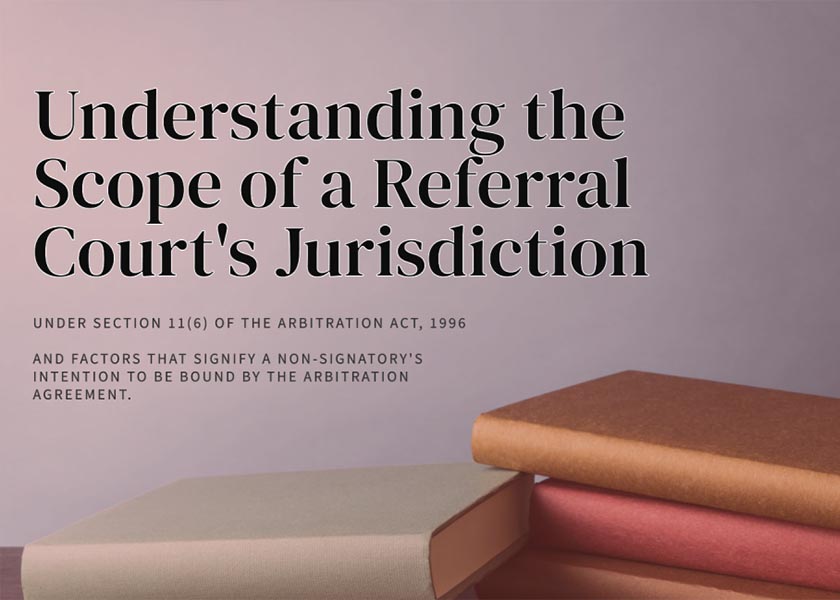
Scope of jurisdiction of the referral court hearing a Section 11- Arbitration Petition
Latest News Scope of jurisdiction of the referral court hearing a Section 11- Arbitration Petition. This appeal was against a judgment passed by the High Court of Judicature at Bombay in a commercial arbitration application whereby the Section 11(4)-Application filed under the Arbitration and Conciliation Act, 1996 of the respondent-BCL Secure Premises Pvt. Ltd. was allowed and an arbitrator was appointed to adjudicate upon the disputes and differences between the parties. A 2-Judges Bench of the Supreme Court held – “24. The scope of jurisdiction of the referral court hearing a Section 11-Petition when faced with an issue of joinder of a non-signatory to the arbitration agreement has been lucidly set out by the five-judge Bench of this Court in Cox and Kings Limited vs. Sap India Private Limited and Another [(2024) 4 SCC 1]” and further – “…the referral court should be prima facie satisfied that there exists an arbitration agreement and as to whether the non-signatory is a veritable party. It further holds that even if the referral court prima facie arrives at the satisfaction that the non signatory is a veritable party, the Arbitral Tribunal is not denuded of its jurisdiction to decide whether the non signatory is indeed a party to the arbitration agreement on the basis of factual evidence and application of legal doctrine. The Court further reinforces this proposition by holding that as to whether the non-signatory is bound would be for the Arbitral Tribunal to decide. But what is primordial is that it should be demonstrated prima facie before the referral court that the non-signatory is a veritable party. According to the “Illustrated Oxford Dictionary (Revised Edition 2003)” the word: “veritable” means “real; rightly so called” (a veritable feast)”, In substance, it means truly, genuinely or for all intended purposes. The referral court under Section 11 is not deprived of its jurisdiction from examining whether the non-signatory is in the real sense a party to the arbitration agreement. The answer thereof will depend on the facts and circumstances of each case after examining the documents pertaining thereto.”. The Bench further held – “35. This does not mean that where the Referral Court finds prima facie a party is not a veritable party still the matter is left to the Arbitral Tribunal. To hold so, would relegate the Referral Court to the status of a monotonous automation. Further, to countenance such an extreme proposition would lead to disastrous consequences, where absolute strangers could walk into the Referral Court and contend that the matter has to perforce go to the Arbitral Tribunal for a decision on the veritable nature of the party. We are not prepared to accept such an extreme proposition. It could happen that one party having undertaken a contract from the other may engage one or more third parties like in the present case. In such a scenario, if there is nothing even prima facie to show that there was any semblance of an intent to effect legal relationship between that party and the party originally granting the contract and/or to indicate that such a third party was a veritable party, such parties cannot be found to be veritable parties.”. The Bench held that the respondent had not established its case to show even prima facie the existence of an arbitration agreement between HPCL and the respondent and that the respondent was a veritable party. The appeal was allowed and the judgment of the Bombay High Court was set aside. HINDUSTAN PETROLEUM CORPORATION LTD. v. BCL SECURE PREMISES PVT. LTD., CIVIL APPEAL NO.14647/2025, SUPREME COURT – 09 DECEMBER 2025. Latest News Hearings Law Lawsuit Scope of jurisdiction of the referral court hearing a Section 11- Arbitration Petition December 10, 2025/Read More Employee in not less than five years of service entitled to payment of gratuity, regardless of retirement or resignation from… December 9, 2025/Read More Unnecessary remand of matters generates fresh round of litigation, should be avoided December 9, 2025/Read More
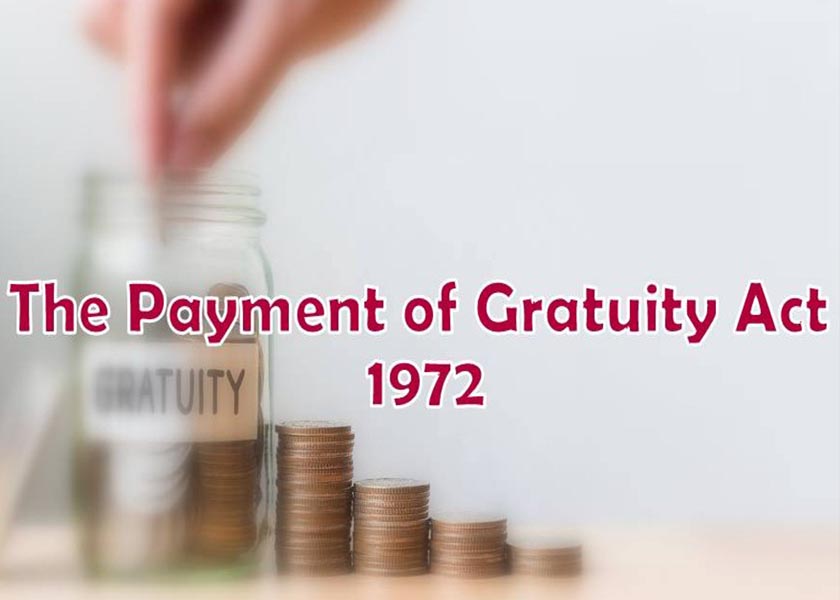
Employee in not less than five years of service entitled to payment of gratuity, regardless of retirement or resignation from service
Latest News Employee in not less than five years of service entitled to payment of gratuity, regardless of retirement or resignation from service. This case concerned a person selected and appointed as a conductor with the respondent Corporation. The deceased employee had opted for a new pension scheme introduced in the Corporation. He resigned from the job after about 29 years citing family circumstances. His resignation was accepted by the competent authority of the Corporation. Later on, a request was made for withdrawal of the resignation which was declined by the competent authority. Thereafter, the deceased employee requested the respondent for release of his retiral benefits i.e. gratuity, provident fund, leave encashment and pension. The Corporation informed him that since he had resigned from service, he was found entitled to only provident fund and no other benefit. Aggrieved against the order of the Corporation, an application was filed by the deceased employee before the Tribunal. The same was dismissed by the Tribunal. A review application was filed which was also dismissed by the Tribunal. The deceased employee then approached the High Court by filing a writ petition which was also dismissed. Aggrieved by the High Court, the appellant approached the Supreme Court. A 2-Judges Bench of the Supreme Court considered Central Civil Services (Pension) Rules, 1972 and held – “9.1 A perusal of Rule 26 of the 1972 Rules clearly shows resignation from service entails forfeiture of past service… 9.2 Rule 36 of the 1972 Rules provides that the government servant who retired or compulsorily retired shall be granted retiring pension in accordance with Rules 48 and 48-A of the 1972 Rules. 9.3 Rule 48 of the 1972 Rules talks about eligibility or grant of pension on completion of 30 years of qualifying service. Whereas Rule 48-A thereof provides for such entitlement on completion of 20 years or more of qualifying service. In the case in hand, the deceased employee had not completed 30 years of service but certainly had more than 20 years service to his credit.”. The Bench referred to earlier judgments of the Supreme Court where it was opined that on resignation, past service of an employee stands forfeited and where the distinction between resignation and voluntary retirement was considered. The Bench held that upon resignation by an employee, his past service stood forfeited and hence, the deceased employee was not entitled to any pension. For payment of gratuity, the Bench considered Section 4 of the Payment of Gratuity Act, 1972 and held – “that an employee who had rendered not less than five years of service will be entitled to payment of gratuity, regardless of the fact that he had retired or resigned from service”. For leave encashment, the respondent had fairly submitted that amount due to the deceased employee shall be paid to his family members. The appeal was partly allowed. ASHOK KUMAR DABAS (DEAD THROUGH LEGAL HEIRS) v. DELHI TRANSPORT CORPORATION, S.L.P.(C) No.4818 of 2023, SUPREME COURT – 09 DECEMBER 2025. Latest News Hearings Law Lawsuit Employee in not less than five years of service entitled to payment of gratuity, regardless of retirement or resignation from… December 10, 2025/Read More Unnecessary remand of matters generates fresh round of litigation, should be avoided December 9, 2025/Read More Growing trend of overturning judgments by succeeding Benches or specially constituted benches painful November 26, 2025/Read More
Unnecessary remand of matters generates fresh round of litigation, should be avoided
Latest News Unnecessary remand of matters generates fresh round of litigation, should be avoided. An application was filed by private respondents before the Collector seeking correction of a map for their plot. The application was dismissed. The order dismissing the application was challenged by the private respondents by filing an appeal before the Additional Commissioner. The appeal was also dismissed. About 17 years thereafter, the private respondents filed a fresh application for correction of the revenue map. This application was also dismissed and the order was challenged by the private respondents. In the appeal, the order was upheld on the ground that there was no good reason to reopen the issue settled long back. Against the orders, the private respondents filed writ petition before the High Court. The High Court set aside the orders and remanded the matter for a fresh consideration. The High Court order was challenged in the Supreme Court. The Supreme Court held that the issue regarding correction of map stood settled between the parties when the appeal filed by the private respondents against the order passed by the Collector, was dismissed. The maps were already final. They could not be permitted to raise the same issue after a gap of more than 17 years as this was not a case where any error was found in the revenue record which deserved correction. The appeal was allowed and the impugned order passed by the High Court remanding the matter was set aside. A 2-Judges bench of the Supreme Court held – “17. We may also add that earlier view by this Court was that in case there were violations of principles of natural justice, the matter was to be remanded for affording opportunity of hearing to the party concerned. However, with the passage of time, the view changed. The idea is to curtail the litigation and not generate it. Any unnecessary remand by a Higher Court generates fresh round of litigation, which should be avoided. Reference can be made to the judgments of this Court in M.C. Mehta v. Union of India and others [(1999) 6 SCC 237]; State of Uttar Pradesh v. Sudhir Kumar Singh and others [(2021) 19 SCC 706] and Krishnadatt Awasthy v. State of Madhya Pradesh [2024 SCC Online SC 493].”. SUVEJ SINGH v. RAM NARESH & ORS., S.L.P.(C) No.1681 of 2024, SUPREME COURT – 09 DECEMBER 2025. Latest News Hearings Law Lawsuit Unnecessary remand of matters generates fresh round of litigation, should be avoided December 9, 2025/Read More Growing trend of overturning judgments by succeeding Benches or specially constituted benches painful November 26, 2025/Read More Whether a letter of intent creates enforceable rights in favour of a bidder November 24, 2025/Read More
Growing trend of overturning judgments by succeeding Benches or specially constituted benches painful
Latest News Growing trend of overturning judgments by succeeding Benches or specially constituted benches painful. This order concerned an application by a murder accused seeking modification of his bail conditions. A 2-Judges Bench of the Supreme Court held – “47. Though elementary, it requires restatement that it is fundamental to the rule of law to maintain the sanctity and finality of judicial verdicts. Judicial orders which determine issues arising between the parties to the lis bind them and its conclusive nature ensures resolution of disputes so that justice is served. The strength of judicial power lies less in the hope of perfection and more in the confidence that decisions, once made, are settled. As Justice Robert Jackson famously said “We are not final because we are infallible, but we are infallible only because we are final”. By upholding the finality of verdicts, not only is endless litigation prevented but public confidence in the judiciary is also maintained. In the recent past, we have rather painfully observed a growing trend in this Court (of which we too are an indispensable part) of verdicts pronounced by Judges, whether still in office or not and irrespective of the time lapse since pronounced, being overturned by succeeding benches or specially constituted benches at the behest of some party aggrieved by the verdicts prior in point of time. To us, the object of Article 141 of the Constitution seems to be this: the pronouncement of a verdict by a bench on a particular issue of law (arising out of the facts involved) should settle the controversy, being final, and has to be followed by all courts as law declared by the Supreme Court. However, if a verdict is allowed to be reopened because a later different view appears to be better, the very purpose of enacting Article 141 would stand defeated. The prospect of opening up a further round of challenge before a succeeding bench, hoping that a change in composition will yield a different outcome, would undermine this Court’s authority and the value of its pronouncements. A matter that is res integra may not be reopened or revisited or else consistency in legal interpretation could be compromised and the special authority that is invested in decisions of this Court, under Article 141, lost. The weight and influence of that special authority depend on the credibility we, the Judges, give to it. As Judges of this Court, we are alive to the position that overturning a prior verdict by a later verdict does not necessarily mean that justice is better served.”. The Bench further held that – “Judicial discipline, propriety and comity, which are also inseparable parts of a just and proper decision-making process, demand that a subsequent bench of different combination defers to the view expressed by the earlier bench, unless there is something so grossly erroneous on the face of the record or palpably wrong that it necessitates a re-look in exercise of inherent jurisdiction either by a review petition or through a curative petition as explained in Rupa Ashok Hurra v. Ashok Hurra – (2002) 4 SCC 388.”. SK. MD. ANISUR RAHAMAN v. THE STATE OF WEST BENGAL & ANR., M.A. in CRIMINAL APPEAL NO.43/2025, SUPREME COURT – 26 NOVEMBER 2025. Latest News Hearings Law Lawsuit Growing trend of overturning judgments by succeeding Benches or specially constituted benches painful November 26, 2025/Read More Whether a letter of intent creates enforceable rights in favour of a bidder November 24, 2025/Read More Nine months delay in filing ITR not condoned November 20, 2025/Read More
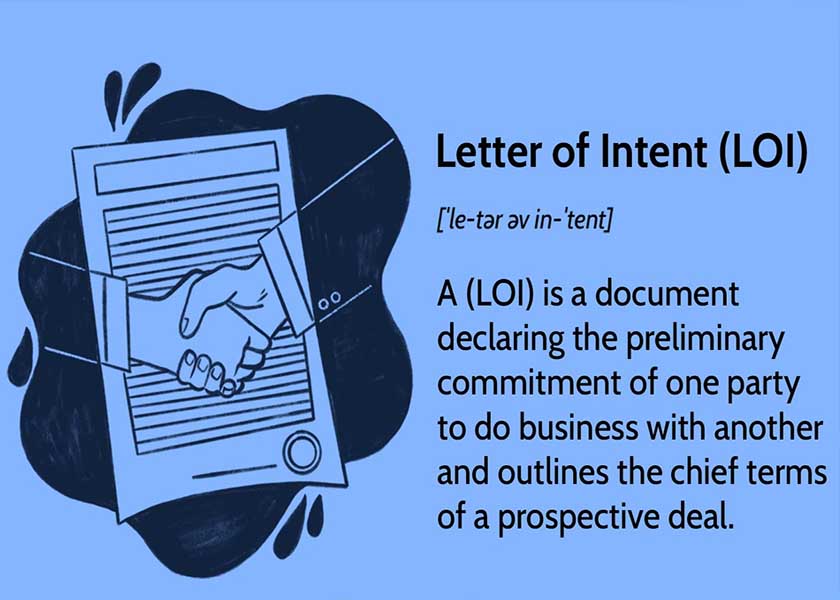
Whether a letter of intent creates enforceable rights in favour of a bidder
Latest News Whether a letter of intent creates enforceable rights in favour of a bidder. This case emanated from a dispute concerning government tenders and dealt with the question – Whether a Letter of Intent created enforceable rights in favour of a bidder. A 3-Judges Bench of the Supreme Court headed by CJI, Surya Kant held – “15. These authorities collectively articulate a coherent doctrine: an LoI creates no vested right until it passes the threshold of final and unconditional acceptance. It is but a “promise in embryo,” capable of maturing into a contract only upon the satisfaction of stipulated preconditions or upon the issue of an LoA. A bidder’s expectation that such a contract will follow may be commercially genuine, but it is not a juridical entitlement. To hold otherwise would be to bind the State in contract before it has consciously chosen to be bound—a proposition foreign to both contract law and public administration.”. The Bench further dealt with the question – Whether the Cancellation Letter was arbitrary or procedurally unjust? The Bench reiterated the decision of M.P. Power Management Co. Ltd. v. Sky Power Southeast Solar India Pvt. Ltd., (2023) 2 SCC 703 – “judicial review in contract matters operates only where the action is “palpably unreasonable or absolutely irrational and bereft of any principle.”” and held that – “The legitimacy of administrative reasoning must be tested with reference to the material that existed at the time the decision was made, not by subsequent embellishment. To simplify: what is permissible is elucidation of contemporaneous reasoning already traceable on record; what is impermissible is the invention of fresh grounds to retrospectively justify an otherwise unreasoned order.”. The Bench also looked into the aspect of whether the Cancellation Letter suffered from arbitrariness and held – “50. The test for arbitrariness under Article 14 is whether the decision is uninformed by reason or guided by irrelevant considerations. … The law does not demand that the State speak only after it has made up its mind; it demands only that its final decision be traceable to reason, not to whim. … Where the effect of administrative action is to enhance openness and restore competition, Courts are doubly cautious before imputing mala fides.” and further held – “Lapse of time does not convert a provisional arrangement into a vested right. The expectation that the Government will ultimately formalise an LoI may be legitimate in the commercial sense, but it is not enforceable in law unless the conditions for formal acceptance are met. The constitutional guarantee against arbitrariness is not a charter of commercial expectations; it is a safeguard against irrationality, and none is established in this record.”. STATE of HIMACHAL PRADESH & ANR. v. M/s OASYS CYBERNATICS PVT. LTD., SLP(C) No.6531/2025, SUPREME COURT – 24 NOVEMBER 2025. Latest News Hearings Law Lawsuit Whether a letter of intent creates enforceable rights in favour of a bidder November 24, 2025/Read More Nine months delay in filing ITR not condoned November 20, 2025/Read More Business Judgement Rule and breach of fiduciary duty November 3, 2025/Read More
Nine months delay in filing ITR not condoned
Latest News Nine months delay in filing ITR not condoned. This writ petition challenged an order rejecting an application filed by the petitioner u/s.119(2)(b) of the Income Tax Act, 1961 seeking condonation of delay of nine months in filing the revised Income Tax Return (ITR). A Division Bench of the Delhi High Court was not convinced with the arguments on behalf of the petitioner. The petitioner’s counsel argued that the earlier ITR was not filed properly but with errors wherein the loss from business was shown as a speculative loss and this was sought to be corrected by filing a revised ITR with an application u/s.119(2)(b) of the Income Tax Act. It was further argued that the petitioner was a non-resident Indian which also resulted in delay in filing the revised ITR. The Bench held that “nine months is a very huge period” and further found the arguments “not appealing as e-portal was accessible globally”. The Bench further held – “8. We have been informed that the petitioner is the President of a Trust that runs a Hospital at Dwarka. If that be so the petitioner is presumed to have the knowledge of the provisions of the Income Tax Act, 1961 (the Act) including the knowledge to know the manner in which a right/correct return is filed. Surely it should not take nine months to realize that initial ITR has some mistakes, which requires a revised return.”. The Division Bench held that the authority had rightly dismissed the application u/s.119(2)(b) and proceeded to dismiss the writ petition being without any merit. SANJAY KHURANA v. INCOME TAX DEPARTMENT MINISTRY OF FINANCE, W.P.(C) NO.17379/2025, DELHI HIGH COURT – 20 NOVEMBER 2025. Latest News Hearings Law Lawsuit Nine months delay in filing ITR not condoned November 20, 2025/Read More Business Judgement Rule and breach of fiduciary duty November 3, 2025/Read More Courts should be wary of setting the criminal or investigative ball rolling against any entity merely on being petitioned by… November 3, 2025/Read More

Business Judgement Rule and breach of fiduciary duty
Latest News Business Judgement Rule and breach of fiduciary duty. This case concerned an arbitration award and proceedings related thereto. Parties had litigated for over a period of 15 years and the allegation of breach of fiduciary duty cropped up after the Award had the imprimatur of the Supreme Court. The question that arose for consideration was – “Whether the High Court was justified in not entertaining the objections filed by the appellant under Section 47 of CPC and in dismissing the same?”. The Court was looking at the issue whether at least prima facie a case of breach of fiduciary duty was established by MMTC. On the basis of material placed on record, the Division Bench held that MMTC was not able to even prima facie demonstrate that the personnel of MMTC did not act in the best interest of the company. A Division Bench of the Supreme Court proceeded to set out the legal parameters as laid down in judicial precedents in cases involving breach of fiduciary duty. The Division Bench held – “a court cannot be swayed by what the Court thinks would have been a reasonable course of action for the director to adopt but the duty is to enquire whether on the available evidence before the Court to consider whether the course adopted by the director was one reasonably competent directors could have adopted”. and further – “as long as the decision taken falls within the range of options reasonably available, Court would defer to the decision of the Board under the “Business Judgment Rule””. The Division Bench also held – “An objection petition under Section 47 should not invariably be treated as a commencement of a new trial.” And dismissed the appeal. The Court added a small postscript – “Whether in Government, Public Sector Corporations or even in the private sector, the driving force of the entity are the persons who administer them. A certain play in the joints is inevitable for their day-to-day functioning. If they are shackled with the fear that, their decisions taken for the day-to-day administration, could years later with the benefit of hindsight, be viewed with a jaundiced eye, it will create a chilling effect on them. A tendency to play it safe will set in. Decision making will be avoided. Policy paralysis will descend. All this will in the long run prove detrimental not just to that entity but to the nation itself. We are not to be understood to be condoning decisions taken for improper purposes or extraneous considerations. All that we are at pains to drive home is that great caution and circumspection have to be exercised before such allegations are brought forward and adequate proof must exist to back them. Otherwise for fear that carefully built reputations could be casually tarnished, best of talent will not be forthcoming, especially for government and public sector corporations.”. MMTC LIMITED v ANGLO AMERICAN METALLURGICAL COAL PVT. LIMITED, CIVIL APPEAL NO. 13321 OF 2025, SUPREME COURT – 03 NOVEMBER 2025. Latest News Hearings Law Lawsuit Business Judgement Rule and breach of fiduciary duty November 3, 2025/Read More Courts should be wary of setting the criminal or investigative ball rolling against any entity merely on being petitioned by… November 3, 2025/Read More Each breach of promise to marry cannot be treated as a ‘false promise’ – depends on its own facts. October 31, 2025/Read More

Courts should be wary of setting the criminal or investigative ball rolling against any entity merely on being petitioned by speculators, howsoever well-intentioned they may be.
Latest News Courts should be wary of setting the criminal or investigative ball rolling against any entity merely on being petitioned by speculators, howsoever well-intentioned they may be. In this case, the petitioner challenged a purely commercial contract executed between the parties and a nationalised bank. A Division Bench of the Delhi High Court held: “…earning of a profit in every commercial transaction into which they embark cannot be regarded as a solemn legal duty of banks. All that is expected is that all efforts should be made to ensure that the necessary checks, enquiries, and due diligence is observed in such cases. Once this is done, the transaction cannot be called into question, in a court, on the ground that it was not financially expedient, or that it resulted in a loss which might have been avoided, had another avenue been explored.”. The Bench held that the requisite degree of financial prudence was exercised by the bank and “entertaining such petitions could throw the entire banking system into jeopardy, and disincentivise banks and financial institutions from entering into bona fide commercial transactions”. Without meaning, in any manner, to doubt the bona fides of the present petitioner, the Bench further held that entertaining such litigation may lead to the possibility of blackmail, in the garb of public interest litigations. “Every such transaction would become vulnerable to be dragged into Court at the instance of persons who claimed to be public spirited citizens, with fragmentary information”. The Delhi High Court held that the petition was merely in the nature of a shot in the dark, based on surmises, conjectures and assumptions, “a writ court cannot set aside a private contract executed between the parties” and the writ petition was dismissed in limine. INFRASTRUCTURE WATCHDOG v UNION OF INDIA AND ORS., W.P.(C) 4123/2025, DELHI HIGH COURT – 03 NOVEMBER 2025. Latest News Hearings Law Lawsuit Business Judgement Rule and breach of fiduciary duty November 3, 2025/Read More Courts should be wary of setting the criminal or investigative ball rolling against any entity merely on being petitioned by… November 3, 2025/Read More Each breach of promise to marry cannot be treated as a ‘false promise’ – depends on its own facts. October 31, 2025/Read More