
Latest News Each breach of promise to marry cannot be treated as a ‘false promise’ – depends on its own facts. In this case, the allegations made in the FIR were that the petitioner had established physical relationship with the complainant on the false promise of marriage. A single Judge of the Delhi High Court held that the material placed on record revealed that the relationship between the petitioner and the complainant was consensual. The Court held: “There is a difference between making a false promise and committing breach of promise by the accused. In case of false promise, the accused right from the beginning would not have any intention to marry the prosecutrix and would have cheated or deceited the prosecutrix by giving a false promise to marry her with a view to satisfy his lust, whereas, in case of breach of promise, the possibility that accused might have given a promise with intent to marry her but subsequently might have encountered certain unforeseen circumstances beyond his control, which prevented him to fulfill his promise, cannot be ruled out. Therefore, it is not appropriate to treat each breach of promise as a false promise of marriage. Each case therefore would depend upon its own case.”. The Court further held: “The Court is conscious of the seriousness of the allegations under Section 376 IPC. However, it is equally well-settled that criminal law cannot be used as an instrument of coercion or revenge when a consensual relationship turns sour. The protection of personal liberty, as enshrined under Article 21 of the Constitution, must remain paramount, especially when the allegations appear to be exaggerated or motivated.”. The petitioner was granted anticipatory bail and it was directed that if the petitioner was arrested, he be released on furnishing a personal bond and subject to the conditions contained in the order. SUMIT v. STATE NCT OF DELHI, BAIL APPLN. 3767/2025, DELHI HIGH COURT – 31 OCTOBER 2025. Latest News Hearings Law Lawsuit Business Judgement Rule and breach of fiduciary duty November 3, 2025/Read More Courts should be wary of setting the criminal or investigative ball rolling against any entity merely on being petitioned by… November 3, 2025/Read More Each breach of promise to marry cannot be treated as a ‘false promise’ – depends on its own facts. October 31, 2025/Read More

Supreme Court upholds transgender rights
Latest News Supreme Court upholds transgender rights. A Division Bench of the Supreme Court, in a significant pronouncement on transgender rights, has awarded compensation to a transwoman whose services as a teacher were terminated by two private schools, one in Uttar Pradesh and another in Gujarat, within a year, on the ground of her gender identity. The Bench also constituted a Committee to be headed by Justice Asha Menon, retired judge of the Delhi High Court, to formulate an equal opportunity policy for the protection of the rights of transgender persons. The remit of the Committee is to: Formulate an equal opportunity policy for transgender persons; Examine the Transgender Persons (Protection of Rights) Act, 2019 Act and 2020 Rules; Recommend measures for reasonable accommodation in workplaces and institutions; Create a grievance redressal mechanism; Facilitate name and gender change processes; Ensure inclusive medical care for transgender and gender diverse persons; and Strengthen protections for gender non-conforming persons. The Bench not only granted compensation for the unjust termination but also issued interim guidelines to ensure equality and protection of transgender persons at workplaces until the government formulates a comprehensive national policy. The judgment builds upon the Supreme Court’s historic judgment in National Legal Services Authority (NALSA) v. Union of India & Ors., (2014) 5 SCC 438, which first legally recognized the transgender community as the ‘third gender.’ Following NALSA, Parliament enacted the Transgender Persons (Protection of Rights) Act, 2019, aiming to safeguard transgender persons from discrimination in education, employment and healthcare. JANE KAUSHIK v UNION OF INDIA AND ORS., W.P.(C) No. 1405/2023, SUPREME COURT – 17 OCTOBER 2025. Latest News Hearings Law Lawsuit Supreme Court upholds transgender rights October 17, 2025/Read More Assessing officer cannot act beyond the mandate of s.144(C)(13) of the Income Tax Act, 1961 and contrary to directions of… October 10, 2025/Read More Plaintiff as master of proceedings is entitled to choose remedy and forum October 9, 2025/Read More

Assessing officer cannot act beyond the mandate of s.144(C)(13) of the Income Tax Act, 1961 and contrary to directions of the Dispute Resolution Panel in s.144(C)
Latest News Assessing officer cannot act beyond the mandate of s.144(C)(13) of the Income Tax Act, 1961 and contrary to directions of the Dispute Resolution Panel in s.144(C) The issue concerned interpretation of s.144(C)(13) of the Income Tax Act, 1961. The Bombay High Court held: “23. The requirements of Section 144 C (13) are: (a) There ought to be directions passed by the DRP as per sub-section (5) of Section 144(C); (b) The directions passed by the DRP under Section 144 C (5) ought to be received by the Assessing Officer; (c) It casts a burden on the Assessing officer by the mandatory language of the Section to complete the assessment; and (d) That the Assessing Officer ought to complete the assessment within one month from the end of the month in which such direction of the DRP is received. 24. The language of Section 144 C (13) is clear, unambiguous and mandatory. It provides a mechanism for the steps that must be taken after proceedings under subsection (5) of Section 144(C) are completed. The mechanism envisaged under the section has a strict timeline, which cannot be deviated from by the Assessing Officer. … 30. The scheme of the Section clearly provides that the Assessing Officer is bound by the directions and he has to complete the assessment within the timelines provided by the Section. The reason for imposing a strict timeline in the Section is that the Assessing Officer must follow the directions issued by the DRP, which are provided for his guidance in completing the assessment. It is a settled principle of law that, where a statute requires something to be done in a particular manner, it has to be done in that manner. The statutory provisions cannot be waived or deviated from.” The Division Bench of the Bombay High Court rejected the submission of the Revenue that in case of remand proceedings, the timelines provided by s.144(C)(13) are not applicable and the assessment can be completed beyond the time limits provided by the section. ARCHROMA INTERNATIONAL (INDIA) PRIVATE LIMITED [earlier known as Huntsman International (India) Private Limited] v. DEPUTY COMMISSIONER OF INCOME TAX & ORS., BOMBAY HIGH COURT – 10 OCTOBER 2025. Latest News Hearings Law Lawsuit Green crackers to light up Diwali festivities October 15, 2025/Read More Assessing officer cannot act beyond the mandate of s.144(C)(13) of the Income Tax Act, 1961 and contrary to directions of… October 10, 2025/Read More Plaintiff as master of proceedings is entitled to choose remedy and forum October 9, 2025/Read More
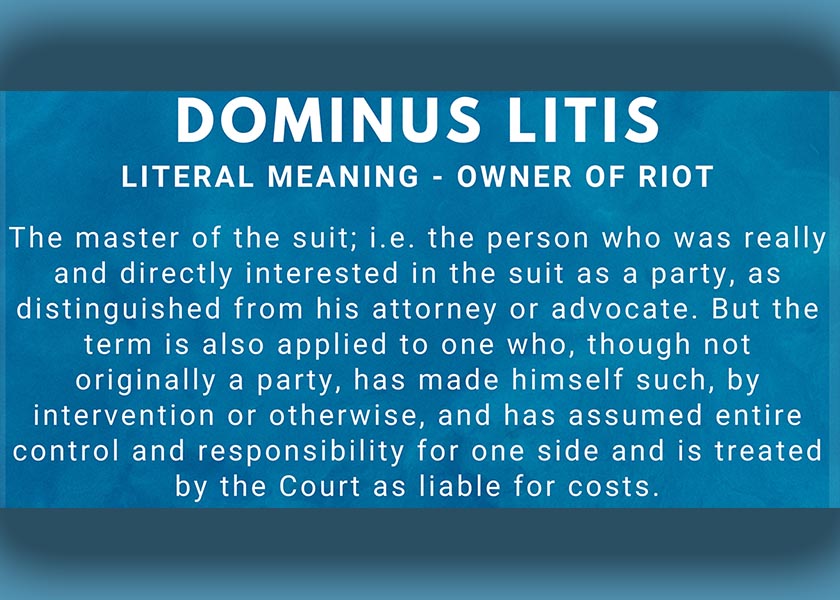
Plaintiff as master of proceedings is entitled to choose remedy and forum
Latest News Plaintiff as master of proceedings is entitled to choose remedy and forum In this case, the Delhi High Court noted that in determining jurisdiction in landlord–tenant matters, the Court is entitled to take judicial notice of the escalation of rents in metropolitan cities and courts cannot ignore prevailing market conditions and the rise in rents while considering valuation. The Division Bench referred to the Supreme Court decision in Commercial Aviation and Travel Co. v. Vimla Pannalal, (1988) 3 SCC 423, that underscored that unless mala fides are demonstrable, the Court should ordinarily accept the plaintiff’s valuation, particularly where relief is not susceptible to precise monetary quantification. It was held: “32. Further, the doctrine of dominus litis entitles the plaintiff to put a valuation to the reliefs claimed and to choose the forum for pursuit of the claim. This discretion is not absolute, but it cannot be interfered with unless shown to be arbitrary or capricious. 33. Accordingly, the Plaintiff, as dominus litis, has the prerogative to initiate proceedings, choose the forum, and value the suit for the relief claimed, subject only to the limitation that the valuation must not be arbitrary, fanciful, or mala fide. Courts ordinarily respect the Plaintiff’s valuation, unless the valuation is shown to be capricious or clearly unreasonable. This principle has been consistently affirmed by various decisions of this Court.” and the objection as to pecuniary jurisdiction was rejected. On Order XII Rule 6 CPC, the Court held that before passing a judgment on admissions, the Court must be satisfied that the admission is clear, unambiguous and unequivocal. It was held: “41. The aforesaid statutory provision has crystallized that in a suit for possession, based on landlord–tenant relationship, a decree can be passed under Order XII Rule 6 CPC, if the following three conditions are met: The existence of the relationship of landlord and tenant between the parties; That the tenancy is not covered under the Delhi Rent Control Act, 1958; and That the tenancy has been duly terminated.” and all the above conditions were found satisfied. The Court further held – “It is a settled principle that a tenant, while continuing in possession, cannot challenge the title of the landlord”. The appeal was dismissed and it was held that the decree under Order XII Rule 6 CPC was properly passed. NASEEM AHMED v. DEEPAK SINGH, DELHI HIGH COURT – 09 OCTOBER 2025. Latest News Hearings Law Lawsuit Green crackers to light up Diwali festivities October 15, 2025/Read More Assessing officer cannot act beyond the mandate of s.144(C)(13) of the Income Tax Act, 1961 and contrary to directions of… October 10, 2025/Read More Plaintiff as master of proceedings is entitled to choose remedy and forum October 9, 2025/Read More

Supreme Court issues directions for all Beggars’ Homes across the country
Latest News Supreme Court issues directions for all Beggars’ Homes across the country. In this case, a Division Bench of the Supreme Court was concerned with Beggars Homes and the conditions of the inmates. The Bench held that “…beggars’ homes cannot be conceived as quasi-penal facilities. Their role must be restorative, not retributive – places of recovery, skill-building, and reintegration into society. The term “home” itself carries semantic and normative weight: it denotes safety, dignity, belonging, and care. Any arrangement that degenerates into a prison-like environment characterised by overcrowding, unhygienic conditions, arbitrary or involuntary confinement, denial of medical treatment, neglect of mental health needs, or restrictions on personal liberty – is not merely a policy failure, but a constitutional infraction striking at the very heart of Article 21” The Bench further held that Article 21 of the Constitution of India, which guarantees the right to life and personal liberty, has been interpreted in an expansive and purposive manner and “is no longer confined to mere animal existence; it embraces within its fold the rights to dignity, health, shelter, privacy, and humane treatment, with heightened protection for the most vulnerable groups”. The Supreme Court issued directions under the following heads, in respect of all Beggars’ Homes across the country to ensure that the improved conditions are continuously maintained: Preventive Healthcare and Sanitation Infrastructure and capacity Nutrition and Food Safety Vocational Training and Rehabilitation Legal Aid and Awareness Child and Gender Sensitivity Accountability and Oversight Implementation and Compliance The Bench further directed the Union of India, through the Ministry of Social Justice and Empowerment, to frame and notify model guidelines to facilitate uniform implementation of the directions across all States and Union Territories, within three months. The detailed directions can be accessed at 2364720032025-09-12-620452.pdf M.S. PATTER v. STATE OF NCT OF DELHI & ORS. [Arising out of SLP (C) No. 878 of 2004], SUPREME COURT – 12 September 2025.
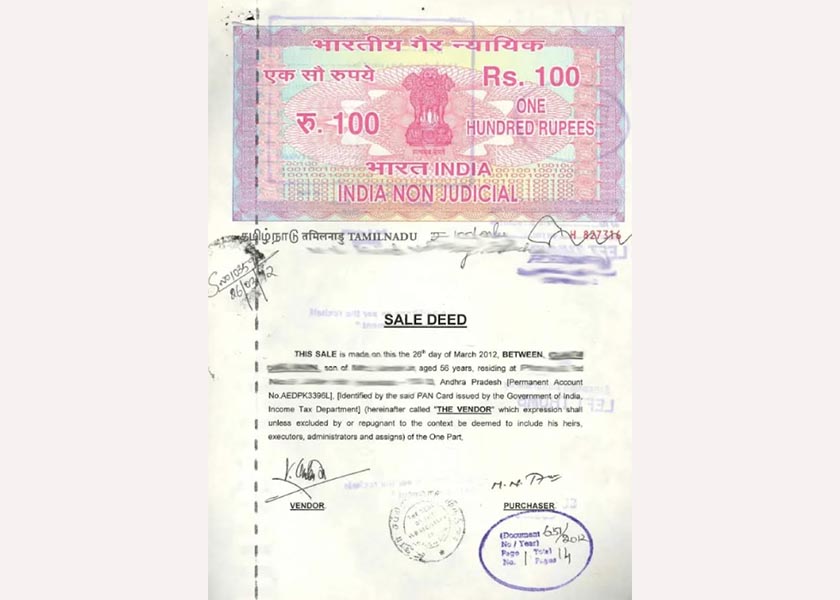
Sale without consideration is void
Latest News Sale without consideration is void. This case concerned a sale deed and arose out of a civil suit that was dismissed by the trial court. The plaintiffs filed a first appeal which was allowed by the district court and the suit was decreed. On the question of limitation, it was held that the limitation period was 12 years applying Article 65 of the Limitation Act, 1963 and the suit was filed within the said period of 12 years. The defendants filed a second appeal in the High Court which was dismissed. On the question of limitation, it was held that the suit was to be filed within 3 years from the date of knowledge (instead of 12 years) applying Article 59 of the Limitation Act, 1963. The legal heirs of the original defendants then approached the Supreme Court and the Supreme Court confined itself to the question whether the plaintiff’s suit was time-barred or not. The Bench held that in order to ascertain whether Article 65 of the Limitation Act, 1963 would apply to the factual scenario, it has to first determine whether fraud was alleged as regards the contents of the sale deed. Since the plaintiff had not executed the sale deed and the original was also not produced, it was held that Article 59 of the Limitation Act, 1963 would not apply. The Bench further reiterated earlier law – “If a sale deed is executed without the payment of price, it is not a sale at all in the eyes of law, specifically under Section 54 of the Transfer of Property Act, 1882. Such a sale without consideration would be void and would not affect the transfer of the immovable property.”. Since there was no sale consideration, the Bench held that in the absence of the sale consideration being tendered, the sale deed would be void and the plaintiff would not be required to seek its cancellation. Therefore, Article 59 of the Limitation Act, 1963 could not be said to be applicable. The Bench further held that the plaintiff “could indeed have maintained an action to obtain possession of the property on the basis of her title and filed the same within the period of 12 years from the date of knowledge that the possession of the defendant was adverse to that of the plaintiff”. The appeal was dismissed holding that the High Court could be said to have committed an error insofar as applying Article 59 instead of Article 65 of the Schedule to the Limitation Act, 1963. The Bench thus clarified the correct position of law and found no infirmity in the ultimate conclusion of the High Court insofar as the maintainability of the suit on the aspect of limitation is concerned. SHANTI DEVI (SINCE DECEASED) THROUGH LRS. GORAN v. JAGAN DEVI & ORS., CIVIL APPEAL NO. 11795 OF 2025, SUPREME COURT – 12 SEPTEMBER 2025.

No right vested in a plaintiff to file Replication
Latest News No right vested in a plaintiff to file Replication. This case arose from an order of the trial court which dismissed an application of the petitioner to file replication on the ground that testimony of PW1 had already commenced. A single Bench of the Delhi High Court did not find any infirmity in the order of the trial court that had taken into account directions of the Delhi High Court for time bound disposal of the suit. The single Judge held: “It is trite that the Civil Procedure Code does not contemplate filing of the replication, though it is judicially sanctified that once the replication is taken on record, it forms part of pleadings. There is no right vested in the plaintiff to file replication.” DINESH KUMAR VERMA v. RAMESH GHAI, CM(M) 1787/2025, DELHI HIGH COURT – 11 SEPTEMBER 2025.
Past misconduct cannot be an effective reason for dismissal but may be mentioned only for adding weight to the decision of imposing punishment.
Latest News Past misconduct cannot be an effective reason for dismissal but may be mentioned only for adding weight to the decision of imposing punishment. This case concerned a respondent who instituted a suit for declaration and mandatory injunction praying that the order passed by the disciplinary authority, appellate authority and revisional authority be declared null, void and illegal; and mandatory injunction be issued for his reinstatement with continuity of service along with back wages with interest @ 12% per annum. The suit was dismissed, first appeal was dismissed, the second appeal was allowed but the relief of back wages was denied to the respondent by the High Court since he had filed an affidavit in the department whereby he had forgone the relief of back wages. The Supreme Court in appeal observed that absence of the respondent from duty on various occasions in a short tenure of service of around 7 years was a gross indiscipline and thus there was no illegality in the order passed by the disciplinary authority dismissing him from service. The Supreme Court held –“The disciplinary authority, while imposing the penalty, had merely referred the past conduct and also given weight to the gravest act of misconduct. The order of dismissal is not based on the charge of “cumulative effect of continued misconduct proving incorrigibility and complete unfitness for police service”… As such, it is concluded that the dismissal of the respondent was based on gravest act of misconduct, for which he was dealt with by the disciplinary authority following the procedure as prescribed and in due observance of principles of natural justice, hence, we do not find any fault in the same.” The appeals were allowed setting aside the high court judgment. STATE OF PUNJAB & ORS. v. EX. C. SATPAL SINGH, Supreme Court Decision – 29 August 2025.

Factors to be considered for grant of maintenance u/s.125 Cr.P.C.
Latest News Factors to be considered for grant of maintenance u/s.125 Cr.P.C. This case dealt with quantum of maintenance awarded to the wife which was under challenge by the husband. The Delhi High Court held – “For granting the maintenance under Section 125 Cr.P.C., essentially two factors have to be considered. Firstly, that the wife has not deserted the husband without any reasonable cause; and Secondly, determination of quantum of maintenance, depending upon the circumstances and working capacity of both the parties.” The Delhi High Court observed that nothing had been brought on record to show that the Respondent-wife had separated without any reason or had deserted the Petitioner-husband and upheld the decision of the family court that the Petitioner-husband had failed to prove that the wife was living separately without any sufficient cause. The Court further held – “The maintenance amount must be determined in a balanced manner; it should be one that ensures adequate support for the wife and child, while also taking into account the Petitioner’s financial obligations of his lability towards Home Loan, his expenses and responsibility towards parents.” The quantum of maintenance was reduced. ANKUSH KUMAR PARASHAR v. SAPNA @ MONA & ANR., Delhi High Court Decision – 29 August 2025.
Call Detail Records and Mobile Location of Spouse can be sought to ascertain adultery In Matrimonial Disputes
Latest News Call Detail Records and Mobile Location of Spouse can be sought to ascertain adultery In Matrimonial Disputes. Four connected Appeals assailing different parts of a common interlocutory Order passed on 29th April 2025 by a Family Court came to be filed before the Delhi High Court. The appeals arose out of a matrimonial dispute which also involved impleadment of an alleged paramour as a party to the proceedings. On impleadment of the alleged paramour, the Delhi High Court held –“Section 13(1)(i) of the HMA recognises adultery as a distinct ground for divorce. The procedural framework governing such petitions requires that full particulars of the alleged matrimonial offence be furnished, including the identity of the person alleged to be involved. Courts have consistently required impleadment of such person to ensure fairness in adjudication… the Family Court cannot effectively or fairly adjudicate the ground of adultery without the presence of the alleged participant. This legislative mandate also underscores a policy choice that allegations of adultery, by their very nature, touch upon the reputation and dignity of a third party, and therefore justice requires that such person be given a fair opportunity to defend themselves.” On The Court further held “In matrimonial disputes where adultery is alleged, courts have consistently held that proof may often be circumstantial, and that evidence of association, stay at hotels, or patterns of communication may constitute relevant circumstances. CDRs [Call Detail Records] and tower location data, if appropriately circumscribed to a defined period, serve as corroborative material to either establish or negate the charge of adulterous association. Such material cannot, therefore, be dismissed as a roving enquiry; it is directly relevant to the issue in controversy.” On production of documents u/Order XI Rule 14 CPC, the Delhi High Court held –“The scope of discovery under this provision is wide but not unlimited. Courts have consistently held that discovery is intended to facilitate fair trial and enable parties to substantiate their claims or defenses. It cannot, however, be used as a vehicle to compel production of irrelevant or extraneous material. The exercise must be guided by relevance to the matters in issue, and the applicant must demonstrate a prima facie link between the requested documents and the claim or defense… In exercising discretion, the Court must balance the right to evidence with the need to protect parties from undue burden or intrusion into private matters not relevant to the issues in dispute. The Court is not bound to grant all requests automatically; it may narrow or refuse requests which are irrelevant, speculative, or disproportionate.” The Delhi High Court upheld the family court’s decision rejecting the application of the alleged paramour for deletion of the name from the array of parties holding that impleadment is both statutorily mandated and necessary to uphold the principles of natural justice. The High Court upheld the decision of the family court allowing the Wife‘s application for production of the Husband‘s CDRs and tower location data of both the Husband and alleged paramour for a specific period holding that the directions were proportionate, directly connected to the pleadings, and were to be complied with under confidentiality safeguards in sealed covers. The decision of the family court allowing production of certain documents was upheld while rejecting some of the others (financial records and hotel details) was set aside. SMITA SHRIVASTAVA v. SUMIT VERMA & ANR., Delhi High Court Decision: – 29 August 2025.