
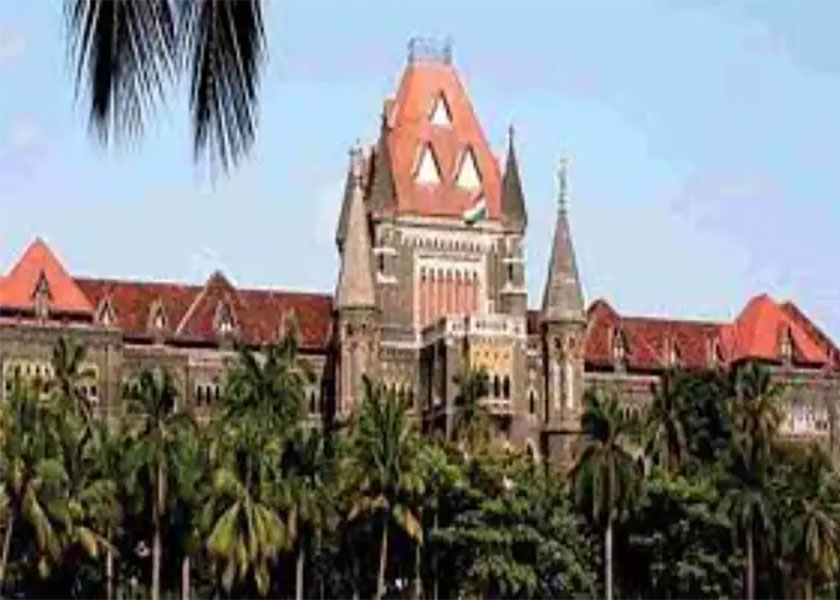
Latest News A PIL has been filed in the Bombay High Court against the Prada Group seeking action against the global fashion house for its alleged unauthorised use of a design deceptively similar to Maharashtra’s famous Kolhapuri Chappals. At the Milan Fashion Week, the luxury brand showcased a pair of toe-ring leather sandals that looked way too similar to India’s iconic Kolhapuri chappals. The public interest litigation (PIL) has been filed by Prof Adv Ganesh S Hingmire (an expert in Geographical Indications) demanding a public apology from Prada and compensating the artisans from Kolhapur who have been making this footwear from centuries. The allegations are that Prada has ignored the cultural roots and GI tag of Kolhapuri Chappals and passed off the style as their own. PROF ADV GANESH S HINGMIRE & ORS. v. PRADA GROUP & ORS., PIL/22677/2025, filed on 4th July 2025
No insurance coverage for legal heirs if an accident occurs due to rash driving of the deceased
Latest News A Bench of Justices P.S. Narasimha and R. Mahadevan have dismissed a special leave petition on 2nd July 2025 holding that they are not inclined to interfere with the judgment passed by the Karnataka High Court. The family members of the deceased filed a claim petition seeking compensation of Rs.80,00,000/- for his death in a road traffic accident. The deceased was driving a Fiat Linea car in high speed, rash and negligent manner without following the traffic rules. He lost control over the same, due to which the car toppled on the road leading to his death. The deceased was not the registered owner of the car. The High Court held that admittedly the accident occurred due to the rash and negligent driving of the deceased himself and he being self tort-feasor, the legal heirs could not claim any compensation for his death, otherwise it would amount to a person committing breach getting compensation for his own wrongs. The High Court had also held that the deceased stepped into the shoes of the owner of the vehicle and for the negligence of the owner or borrower of the vehicle, the Insurance Company could not be compelled to indemnify for such wrongs. G. NAGARATHNA & ORS. v. G. MANJUNATHA & ANR., SLP (CIVIL) No.22411/2025, DECIDED ON 2ND JULY 2025
Written grounds of arrest to be furnished to accused before or forthwith after arrest?
Latest News In a case filed by the State of Karnataka, the Supreme Court will consider the issue as to whether its judgment in Pankaj Bansal v. Union of India, which held that the Directorate of Enforcement (ED) must furnish grounds of arrest to the accused in writing, is retrospective in application or not. A bench of Justices K.V. Viswanathan and N.K. Singh heard the matter on 24th June and posted it to 26th June 2025. On 26th June 2025, the Bench issued notice on the special leave petition and on the prayer for interim relief and passed the following order – “Our attention has also been drawn to the order dated 22.04.2025 passed in SLP(Crl.) No.17132/2024, wherein the Bench while reserving the order has recorded the following in paragraph 3: “3. The question that we are called upon for consideration in the present proceedings is: whether in 1 each and every case, even arising out of an offence under Indian Penal Code, would it be necessary to furnish grounds of arrest to an accused either before arrest or forthwith after arrest. Another question that this Court is required to consider is: whether, even in exceptional cases, where on account of certain exigencies it will not be possible to furnish the grounds of arrest either before arrest or immediately after arrest, the arrest would be vitiated on the ground of non-compliance with the provisions of Section 50 of the Code of Criminal Procedure. The outcome of this judgment will have a bearing on finally deciding this matter.” The Court appreciating the urgency of the matter posted it to 18th July. STATE OF KARNATAKA BY ARASIKERE TOWN POLICE STATION v. HEMANTH DATTA @ HEMANTHA @ BABY & ANR., Special Leave to Appeal (Crl.) No. 9295/2025.
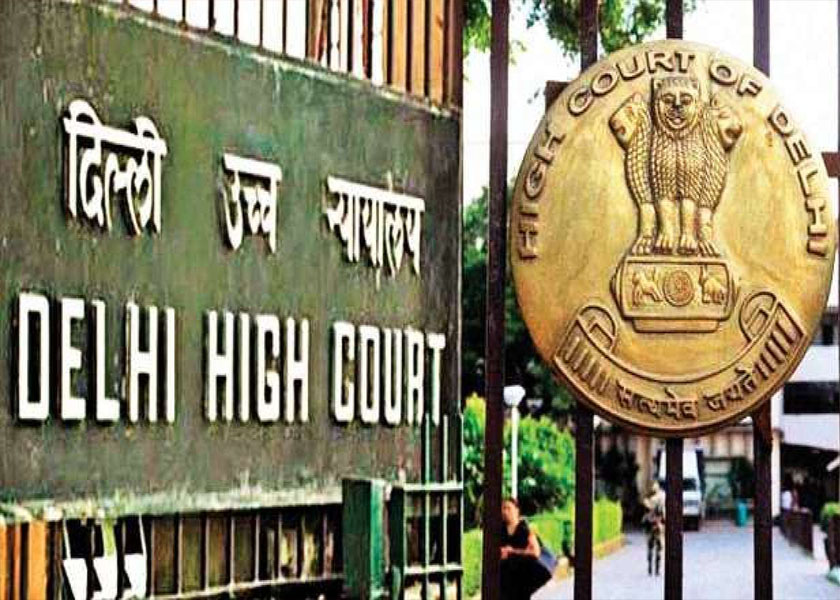
Employees cannot be compelled to choose between working for former employer or remaining idle.
Latest News The Delhi High Court has ruled that employees cannot be forced to choose between working for their previous employer or remaining idle. A vacation bench of Justice Tejas Karia held, “An employee cannot be confronted with the situation where he has to either work for the previous employer or remain idle. An employer employee contracts, the restrictive or negative covenant are viewed strictly as the employer has an advantage over the employee and it is quite often the case that the employee has to sign standard form contract or not be employed at all. Further, the reasonableness and whether the restraint is partial or complete is not required to be considered at all when an issue arises as to whether a particular term of contract is or is not in restraint of trade, business or profession.” The Court thus held that any terms of the employment contract that impose a restriction on the right of an employee to get employed post-termination of the contract of employment shall be void being contrary to Section 27 of the Indian Contract Act. VARUN TYAGI v. DAFFODIL SOFTWARE PRIVATE LIMITED, FAO 167/2025, decision dated 25th June 2025.

Should OBC certificate be issued to children of single mothers on the basis of such certificate held by the mother?
Latest News This writ petition raises an important issue about issuance of Other Backward Class certificate to the children of single mothers, where the mother belongs to the Other Backward Class category. The claim of the petitioner is that the certificate should be issued on the basis of the certificate held by the single mother. The grievance of the petitioner is that the present guidelines provide for considering the Other Backward Class certificate issued to any paternal blood relatives as the basis. According to the petitioner, this causes grave hardship to the single mothers. Referring to the judgment passed by the Supreme Court in Rameshbhai Dabhai Naika v. State of Gujarat, (2012) 3 SCC 400, wherein observations were made with regard to single mothers belonging to the SC/ST categories, the Additional Solicitor General submitted that similar guidelines would have to be laid down in the present matter also. The Bench of H.M.J. K.V. Viswanathan and H.M.J. N.S. Singh considering the importance of the matter, posted it for final hearing and granted liberty to the petitioner to serve a copy of the petition on the Standing Counsel for all the States to enable them to put in appearance and place their point of views. The matter will come up for final hearing on 22nd July 2025. SANTOSH KUMARI v. GNCTD AND OTHERS, W.P.(C) 55/2025.
Chandrasen Yadav vs. Union of India and Others, Diary No. – 33086/2025, Filed on 16th June 2025
Latest News Chandrasen Yadav vs. Union of India and Others, Diary No. – 33086/2025, Filed on 16th June 2025 A review petition has been filed in the Supreme Court on 16th June 2025 seeking review of the May 20, 2025 judgment in All India Judges Assn. v. Union of India, 2025 SCC OnLine SC 1184, prescribing a minimum three years of practice at the Bar as a prerequisite for appearing in the examination for the post of Civil Judge (Junior Division). The petitioner, while stating that the judgment suffered from apparent errors on record warranting a review, has also prayed that the mandatory three-year practice rule should be implemented only from 2027 onwards to avoid unjust exclusion of recent graduates (2023–2025) who prepared under the previous eligibility criteria.
RSPL Health Pvt. Ltd. V. Sun Pharma Laboratories Limited & ANR., FAO (COMM) 65/2025 & CM APPL. 12743/2025, Decided on 12th June 2025
Latest News RSPL Health Pvt. Ltd. V. Sun Pharma Laboratories Limited & ANR., FAO (COMM) 65/2025 & CM APPL. 12743/2025, Decided on 12th June 2025 The Delhi High Court has dismissed the Appeal of ‘Pro-ease’ against ‘Pruease’ in a trademark infringement case. RSPL Health Pvt. Ltd. filed an Appeal under Section 13 of the Commercial Courts Act, 2015 challenging an order of a District Judge, dismissing the application filed under Order XXXIX Rules 1 and 2 of the Code of Civil Procedure, 1908. A Division Bench of Justice Navin Chawla and Justice Shalinder Kaur held, “The Courts have time and again cautioned that in appeals challenging the orders passed by the learned Trial Court in exercise of its discretionary jurisdiction, the appellate court will not interfere with, except where the discretion has been shown to have been exercised arbitrarily or capriciously or perversely or where the court has ignored the settled principles of law regulating grant or refusal of interlocutory injunctions.”. The Bench further held, “…the goods are distinct, having distinct and separate trade channels, and there is no likelihood of confusion being caused to the public by the use of the marks. There is also no case of passing off made out by the appellant as the packaging of the products and the manner of the depiction of the mark along with other additional ingredients of the label do not indicate any likelihood of confusion resulting in the use of the same”.
Sanjay Rathore vs. State (Govt. Of NCT Delhi), SLP(Crl) No.8930/2025, decided on 10th June 2025
Latest News Sanjay Rathore vs. State (Govt. Of NCT Delhi), SLP(Crl) No.8930/2025, decided on 10th June 2025 The Supreme Court on 10th June 2025 declined to reduce the 18-month imprisonment awarded to an advocate convicted for using abusive and vulgar language against a woman judicial officer during a court proceeding, asserting that such behaviour threatens the safety and dignity of women judges. A bench comprising Justice Prashant Kumar Mishra and Justice Manmohan was hearing a plea challenging a Delhi High Court order that upheld the conviction of the lawyer, Sanjay Rathore. The apex court refused to show leniency in sentencing, stating sternly, “Today, majority of our officers in Delhi are women. They will not be able to function like this—if somebody can get away like this. Think of their state.”.
The Delhi High Court recently granted relief to a POCSO convict noting that the prosecution failed to establish that the survivor was a minor
Latest News The Delhi High Court recently granted relief to a POCSO convict The Delhi High Court recently granted relief to a POCSO convict, noting that the prosecution failed to establish beyond doubt that the survivor was a minor at the time of alleged offence [Karan Kumar v. State & Anr.]. Justice Amit Sharma observed that the survivor’s date of birth mentioned in her school register was not on the basis of any proof of birth document issued by any Corporation or a Municipal Authority or a Panchayat. Rather, the entry was made based on what was conveyed by her parents. The bench also took into account the survivor’s assertion that she was a major at the time of incident, born on the day of Holi in March, 1998 and her age given by the parents is incorrect. As such, the bench observed, “it was incumbent upon the prosecution to establish that the victim’s age was less than 18 years by conducting ossification test or any other latest medical age determination test conducted on orders of the Committee or the Board.” It held that the prosecution failed to discharge its obligation to prove that the survivor was a child in terms of Section 2 (1)(d) of the POCSO Act.

On Environment Day Kerala High Court directed to release all available information concerning hazardous cargo and oil spill
Latest News On Environment Day Kerala High Court Orders Government To Disclose Capsized Ship MSC Elsa’s Cargo Details On Environment Day (5th June 2025), the Kerala High Court directed the State government to release all available information concerning hazardous cargo and oil spill from the sinking of Liberian cargo ship MSC Elsa-3 on May 24 off the coast of Alappuzha [TN Prathapan v. Union of India & Ors.] A Bench of Chief Justice Nitin Jamdar and Justice Basant Balaji passed the direction while hearing a public interest petition (PIL) filed by Congress leader and former Member of Parliament TN Prathapan. The PIL sought the Court’s intervention to ensure proper compensation, environmental clean-up, and enforcement of action under both Indian and international law.