

Latest News A 2-Judge Bench of the Supreme Court was called upon to decide: “Whether every allegation or accusation levelled, a reprimand or rebuke made, an insinuation or insult voiced or even continuous acts of ill-treatment, harassment and defamation; as alleged in this case, would lead to a charge of abetment, if the person at the receiving end commits suicide, is a vexed question the Courts are called upon to decide when a charge is raised under Section 306 of the Indian Penal Code, 1860” now s.108 of the Bharatiya Nyaya Sanhita, 2023. A 7-time MP committed suicide in February 2021 leaving behind a suicide note which named persons in the administration and police, who according to him, conspired to defame, degrade and demean him so as to end his political career and bring down his social standing, thus driving him to suicide; which he proclaimed in his last note, was his only option. The accused, named in the suicide note, filed separate applications to quash the FIR, u/s.482 of the Code of Criminal Procedure, 1973. The petitions were allowed by the Bombay High Court by a common order, against which the appeals were filed before the Supreme Court. The Bench held that “…even if there is allegation of constant harassment, continued over a long period; to bring in the ingredients of Section 306 read with Section 107, still there has to be a proximate prior act to clearly find that the suicide was the direct consequence of such continuous harassment, the last proximate incident having finally driven the subject to the extreme act of taking one’s life… The real intention of the accused and whether he intended by his action to at least possibly drive the victim to suicide, is the sure test.”. The Bench noted the complaints made, the statements recorded, the suicide note; over which there was a cloud, and the subsequent conduct of the police regarding the delay in registering a crime and the casual statements made in the FIR and dismissed the appeals holding that the allegations levelled were not the direct causation of the death. ABHINAV MOHAN DELKAR v. THE STATE OF MAHARASHTRA & ORS., Crl. Appeal Nos.2177-2185/2024, Date of Decision: 18 August 2025.
Builder Agreement Cannot Modify Shares of Family Members in Memorandum of Family Settlement.
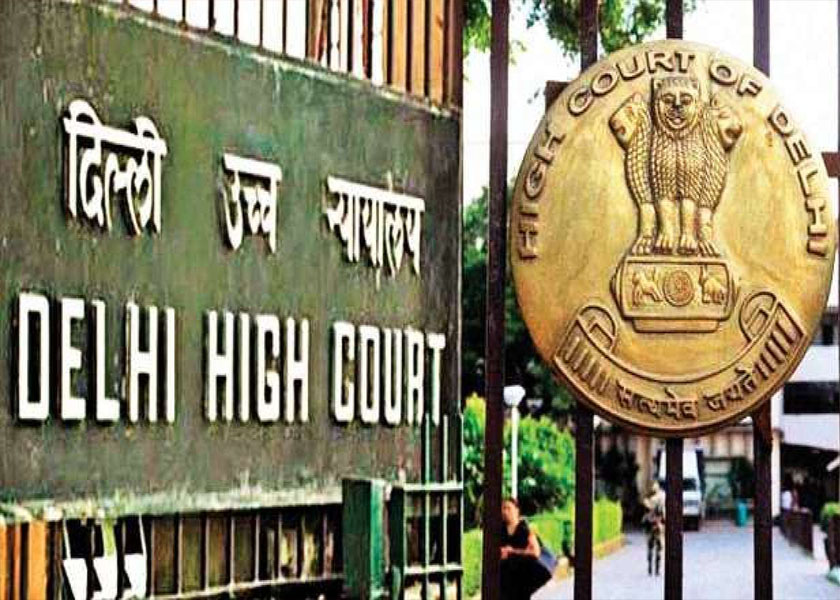
Latest News A Division Bench of the Delhi High Court has held that a Memorandum of Family Settlement “does not require registration because neither any new right is sought to be created nor extinguished, only the manner of enjoyment of suit property has been delineated, which does not result in the creation of any right”. The Bench further held that “Modification, novation and alteration of a contract is regulated by Section 62 of the Indian Contract Act, 1872. Its first requirement is that the parties to the contract agree to substitute a new contract… The second requirement is that there should be an intention to substitute the previous contract with a new contract…”. It was observed that once the respective shares of the family members were identified by a memorandum of family settlement, a Builders’ Agreement entered into for construction of a building, will not result in its modification or novation. The appeals was dismissed. SUMAN SINGH VIRK & ANR. v. DEEPIKA PRASHAR & ANR., RFA(OS) 61/2024, Date of Decision: 18 August 2025.
No stray dogs to be out on the streets.
Latest News A 2-Judge Bench of the Supreme Court taking suo moto cognizance of a disturbing and alarming Newspaper cutting reported by the `Times of India’ titled “City Hounded By Strays, Kids Pay Price”, passed directions to immediately start picking up stray dogs from all localities and shift them to dog shelters. The Bench further said that not a single stray dog was to be released. The Bench warned that any individual or organisation obstructing the authorities from picking up stray dogs, would face legal consequences. The directions also extend to the NCR region. The Supreme Court Bench clarified that authorities can use force if it was necessary to pick up the strays. The State of NCT of Delhi, MCD and NDMC have been directed to immediately make dog shelters and report about the creation of infrastructure within 8 weeks. IN RE: “CITY HOUNDED BY STRAYS, KIDS PAY PRICE”, SMW (C) No.5/2025.
Supreme Court Quashes Army Policy to Reserve Higher Number of JAG Posts for Men than Women.
Latest News A 2-Judge Bench of the Supreme Court struck down a policy of the Indian Army to reserve posts in the Judge Advocate General (JAG) branch for men and restricting the number of women who can be appointed to JAG posts. The Bench held that “The practice of fixing a ceiling limit to recruitment of female candidates has the effect of perpetuating the status quo, which has been historically discriminatory to women candidates. The result of such practice is confinement of women candidates, irrespective of their performance/merit, in their gendered category, thereby being destructive of not just the Constitutional scheme under Articles 15 and 16 as noted hereinabove, but also of the concept of ‘gender-neutrality’ and ‘merit’.”. The Bench held that the executive cannot restrict the numbers of women candidates and/or make a reservation for male officers under the guise of ‘extent of induction’ by way of a policy or administrative instruction and further that the true meaning of gender-neutrality was that all meritorious candidates, irrespective of sex/gender, should be selected. ARSHNOOR KAUR v. UNION OF INDIA, W.P.(C) No. 772/2023, Date of Decision: 11 August 2025.
Suit under s.92 CPC and pre-conditions
Latest News A 2-Judge Bench of the Supreme Court summarised the principles related to s.92 of the Code of Civil Procedure, 1908 (“CPC”) and explained the circumstances when a registered society can be construed as a ‘constructive trust’ so as to maintain a suit under s.92 against it. The Bench was tasked with determining whether a constructive trust could be created in a circumstance wherein a society vests its property in its governing body through the deeming fiction employed under s.5 of the Societies Registration Act, 1860. The Bench held – “A suit under Section 92 of the CPC is a representative suit of a special nature since the action is instituted on behalf of the public beneficiaries and in public interest”. The Bench reiterated the conditions or essential pre-requisites to be fulfilled for the applicability of s.92 CPC – “(a) the trust in question must be created for public purposes of a charitable or religious nature; (b) there must exist a breach of trust or a direction of the court must be necessary for the administration of the trust; and (c) the relief claimed must be one or other of the reliefs as enumerated under Section 92(1) of the CPC”. The Bench held that the method of devolution of the property to the institution or its acquisition, the intention behind the grant of property i.e. for the benefit of the organization or for the personal benefit of any particular individual/family i.e. the historical setting and circumstances of the grant are to be considered while concluding whether a trust of a public charitable or religious nature exists. The Bench further held that the institution of the suit must be made by two or more persons “having an interest in the trust” i.e. the interest must denote a present and substantial interest and not a sentimental, remote, fictitious or purely illusory interest. It must be clear and direct. The list of reliefs in s.92(1) relate to removing a trustee, appointing a new trustee, vesting any property in a trustee, directing accounts and inquiries, declaring what proportion of the trust property or of the interest therein shall be allocated to any particular object of the trust, authorising the whole or any part of the trust property to be let, sold, mortgaged, or exchanged, settling a scheme, or granting such further or other reliefs as the nature of the case may require. The detailed judgment can be read at 47882_2024_8_1502_63019_Judgement_05-Aug-2025.pdf. OPERATION ASHA v. SHELLY BATRA & ORS., CIVIL APPEAL NO. 10048 OF 2025, Date of Decision: 5 August 2025.
Mental health is an integral component of the right to life under Article 21.
Latest News A 2-Judge Bench of the Supreme Court has ruled that This case dealt with unnatural/suicide death of a student. The Supreme Court reiterated the settled principle of law that “the power to transfer the investigation of a criminal case to the CBI is an extraordinary measure, which must be exercised with great caution, and only in rare and exceptional circumstances” and transferred the investigation to the CBI. The judgment is structured in two parts – Part A : factual circumstances and Part B : immediate interim guidelines. The Supreme Court held, “Mental health is an integral component of the right to life under Article 21 of the Constitution of India.” And laid down 15 guidelines “which shall remain in force and be binding until such time as appropriate legislation or regulatory frameworks are enacted by the competent authority”. The guidelines apply to all educational institutions across India, including public and private schools, colleges, universities, training centres, coaching institutes, residential academies, and hostels, irrespective of their affiliation. The judgment can be read here judgment-184892024-25-07-2025-612080.pdf ANURAG BHATNAGAR & ANR. v. STATE (NCT OF DELHI) & ANR., SPECIAL LEAVE PETITION (CRIMINAL) NO.18084 OF 2024, Date of Decision: 25 July 2025.
Magistrate’s Order For FIR Not Vitiated Merely Because Complainant did not Avail Remedy Under S.154(3)
Latest News In this case, the informant did not approach the officer-in-charge of the police station nor the Superintendent of Police concerned as contemplated u/ss. 154(1) and 154(3) of the CrPC but directly went to the Magistrate u/s.156(3). The Supreme Court declined to interfere on the ground that though the Magistrate ought not to ordinarily entertain an application u/s.156(3) CrPC directly unless the informant has availed and exhausted his remedies u/s.154(3), but as the Magistrate is otherwise competent u/s.156(3) to direct registration of an FIR if the allegations in the application/complaint disclose the commission of a cognizable offence, the order so passed by the Magistrate would not be without jurisdiction and would not stand vitiated on this count. A 2-Judge Bench of the Supreme Court held, “It is a settled law that one of the modes for setting criminal law into motion is by giving information to the police authorities in accordance with Section 154 CrPC whereupon if a cognizable offence is prima facie made out to the satisfaction of the police, it may investigate into the offence even without the permission of the Magistrate. The information so given is ordinarily called the “First Information”, though this terminology has not been used under the CrPC.”. It was further held, “On a conspicuous reading of the provisions of Sections 154, 156 and 190 of the CrPC together, it is crystal clear that an informant who wants to report about a commission of a cognizable offence has to, in the first instance, approach the officer-in-charge of the police station for setting the criminal law into motion by lodging an FIR. However, if such an information is not accepted by the officer-in-charge of the police station and he refuses to record it, the remedy of the informant is to approach the Superintendent of Police concerned. It is only subsequent to availing the above opportunities if he is not successful, he may approach the Magistrate under Section 156(3) 15 CrPC for necessary action or of taking cognizance in accordance with Section 190 of the CrPC.” The Bench also held that the person aggrieved must first exhaust the alternative remedies available to him in law before approaching the court of law, he cannot ordinarily approach the court directly. ANURAG BHATNAGAR & ANR. v. STATE (NCT OF DELHI) & ANR., SPECIAL LEAVE PETITION (CRIMINAL) NO.18084 OF 2024, Date of Decision: 25 July 2025.
Foreign Entity Doing Business Through Temporary Premises In India Liable To Tax
Latest News In this case, the appellant, engaged in rendering consultancy services in the hotel sector, was a company incorporated in Dubai, and a tax resident of the UAE as per Article 4 of the Agreement between India and UAE for the Avoidance of Double Taxation DTAA. The issue related to taxing the hotel related services rendered by the appellant on the ground that the appellant has a Permanent Establishment (PE) in India in the form of a place of business under Article 5(1) of the DTAA. A 2-Judge Bench of the Supreme Court held, “The question of what constitutes a “place of business” under Article 5(1) of the DTAA is no longer res integra. In Formula One World Championship Limited v. Commissioner of Income Tax, International Taxation-3, Delhi & Anr. [(2017) 15 SCC 602], this Court unequivocally held that for a Permanent Establishment (PE) to exist, two essential conditions must be satisfied: (i)the place must be “at the disposal” of the enterprise, and (ii)the business of the enterprise must be carried on through that place. The Court further held that a PE must demonstrate the three core attributes of: stability, productivity, and a degree of independence. Among these, the “disposal test” is pivotal, meaning thereby the enterprise must have a right to use the premises in such a way that enables it to carry on its business activities. This test is to be applied contextually, taking into account the commercial and operational realities of the arrangement.” The Supreme Court held that the appellant had a fixed place PE in India within the meaning of Article 5(1) of the DTAA, and that income received was attributable to such PE and therefore taxable in India. HYATT INTERNATIONAL SOUTHWEST ASIA LTD. v. ADDITIONAL DIRECTOR OF INCOME TAX, CIVIL APPEAL NO. 9766 OF 2025, Date of Decision: 24 July 2025.
Swagath Restaurant moves Delhi High Court over trademark infringement
Latest News On 3rd July 2025, popular restaurant chain Swagath moved the Delhi High Court against a Telangana-based hotel named Swagath for trademark infringement. The proprietors of Swagath restaurant have also sought cancellation of their rival’s registered mark. The petition was filed on 3rd July and listed on 4th July 2025 before Justice Amit Bansal who issued notice on both the infringement suit and the rectification petition. Swagath Delhi, a popular restaurant chain operating in North India, argued that it had acquired goodwill and reputation under the mark ‘SWAGATH’. The petition is filed against Hotel Swagath, a restaurant and hotel chain operating under the name ‘SWAGATH’ since 1991. It currently runs 11 establishments across Telangana. The case will be considered next on 27th August, 2025 on the issue of interim relief M/s. Swagath v. Dhanturi Hari Shankar & Anr., C.O. (COMM.IPD-TM)-150/2025, date of first listing 4th July 2025.
PIL in Bombay High Court alleges luxury brand Prada copied Kolhapuri chappals
Latest News A PIL has been filed in the Bombay High Court against the Prada Group seeking action against the global fashion house for its alleged unauthorised use of a design deceptively similar to Maharashtra’s famous Kolhapuri Chappals. At the Milan Fashion Week, the luxury brand showcased a pair of toe-ring leather sandals that looked way too similar to India’s iconic Kolhapuri chappals. The public interest litigation (PIL) has been filed by Prof Adv Ganesh S Hingmire (an expert in Geographical Indications) demanding a public apology from Prada and compensating the artisans from Kolhapur who have been making this footwear from centuries. The allegations are that Prada has ignored the cultural roots and GI tag of Kolhapuri Chappals and passed off the style as their own. PROF ADV GANESH S HINGMIRE & ORS. v. PRADA GROUP & ORS., PIL/22677/2025, filed on 4th July 2025